
Why was Moses buried in the desert? Why are the Chabad Rebbes buried in the Diaspora? A fascinating mystical discussion about the responsibilities of Jewish leaders and how they continue to tend to their communities—even after their passing.

Why was Moses buried in the desert? Why are the Chabad Rebbes buried in the Diaspora? A fascinating mystical discussion about the responsibilities of Jewish leaders and how they continue to tend to their communities—even after their passing.

Judaism claims “Jacob did not die” and “King David is alive and well.” What does that mean? A Talmudic adage that has become ever-relevant in the past three decades of the Chabad movement

I have too many responsibilities in my life. Is prioritization the solution, or is there a more powerful tool?

Why do we drink four cups of wine at the Seder; can I drink a fifth? Why do we pour another cup for Elijah; is he sitting down at our Seder table?

Why do we circumcise on Shabbat? Can't we just delay the surgery by a day, and not violate Shabbat? The history of circumcision and the surprising qualification required of the circumciser.

2 Mitzvot stood between the Jewish people and the Exodus, and 2 Mitzvot can bring our redemption. A journey between Moses in Egypt, Rabbi Matya in Rome, and the Lubavitcher Rebbe in New York.

A young Jewish woman married to a Greek officer storms the Holy Temple, kicks the altar, and shouts "wolf, wolf..." Can anyone give this story a positive spin?

What was so wrong with attending Achashverosh’s feast? A new perspective on what lay behind Haman’s genocidal plot and the Purim miracle.

The word "Jew" is a derivative of Judah, one of the twelve tribes of Israel. So why are we all referred to by the name of a single tribe?

The history of census counts of the Jewish people, from the days of Moses and kings Saul and David, and the connection to counting ten for a minyan in the synagogue.

What is worse: worshipping idols, or doing a bit of both - idols and G-d? Lessons from the great showdown on Mt. Carmel.

Mordechai and Haman both knew: The children hold the key to victory or failure for the Jewish people. And a little joy goes a long way

What did Moses put inside the Ark of the Covenant, and how does that inform the correct depiction of the Tablets?

When a person receives a deposit, they are obligated to guard it. What degree of responsibility do we bear towards the world and the life we receive every morning?

Can humanity be governed by a moral code not rooted in belief in G-d?

There are moments in life when prayer is not enough - we must act!
A lesson about Moses' leadership during times of crisis and the eternal lessons it teaches us.

The Rebbe's historic vision of our generation's mission and how to achieve it.
Excerpts from the Rebbe's monumental first address.

A historical journey into the relentless Egyptian efforts to control the Jewish birthrate, and a look at the heroism of Jewish women.

Moshe condemns Datan for only raising his hands, even before he hit Aviram. Why?

Judaism teaches us not to accept matters at face value, but to delve into their true meaning.
What seems positive isn't always good for us.

Moses dedicated the Mishkan, Solomon dedicated the First Temple, but only the Hasmonean rededication became a festival we celebrate until today.
Why?

The haters' arguments can teach us what's important, what's true, and what needs improvement.

A fascinating lesson about physical captives,
mental captivity, and the road to freedom.

A lifestyle of brute power vs. an educational path of faith and spirituality.
A 13 year old boy takes on Og the Giant.

Do you know what is your purpose in life?
How does this express itself in your order of priorities?
A life lesson from Abraham and Sarah.

Helping others and praying for others isn't self-sacrifice
- it's a profitable investment!

It is a difficult time for Jewish people. Israel is at war.
What can we do to help? How can we deal with the fear and anxiety?
And why is it so destructive to speak negatively about fellow Jews at this time?

When are we to say the truth about people’s behavior? And what is the connection to our soul?
A powerful lesson from Noach, Moshe and Rashi.

Why is Sukkot the most joyous holiday?
Is it related to agriculture and economics or perhaps to our failures?
The happiest Sukkot in Jewish history.

The High Holiday season is a fascinating train ride with multiple stops at critical stations to accumulate the energy, guidance and inspiration we need for the year. Come along for the ride!

Who wrote the text of the Torah, and when was it dictated to millions of writers?
The history of The Book

The events of the passings of Elijah the prophet and the Baal Shem Tov offer insights into their lives' purpose and mission

Elisha rebelled against G-d, but Rabbi Meir continued to study from him. How is this possible? A fascinating story with a critical lesson about children's education.

Does our spiritual state have any influence over our physical? The spiritual building blocks of our physical world.

I employed someone in my company and laid him off due to financial circumstances. What responsibilities do I have towards him, aside from my contractual and legal obligations?

What is prayer all about? What should a person who lacks nothing pray for? An exploration of the four rungs of the prayer ladder.

Was the Ark taken into captivity, or buried in a Temple Mount tunnel? What did the Rebbe say to someone searching for the Ark under the mountain?
A fascinating journey through history that sheds new light on the meaning of the Temple in our time.

The golden calf, the translation of the Torah, and Shammai's "power grab". A historical journey through dramatic moments in our past, with a bold message for the present.

Should you force the kids to go to synagogue?
Strict parenting might produce quick results, but guiding with the powers of persuasion is more effective and durable.
History proves it.

Intuition, devotion, and influence: the three defining feminine characteristics that are so important in our lives.

An angel is blocking Bilaam's way,
and his donkey rebukes him publicly.
Why all the drama?
A lesson about the meaning of punishment
and the importance of every individual.

Historically, our nation's most transformative moments came as a result of persecution.
In this foundational discourse, the Rebbe explains how today's freedoms set the stage for Judaism's most consequential test.

Optimism isn’t naivety, the majority isn’t always right, and modernity isn’t an enemy. Lessons from the spies of Moses and Joshua.

The Menorah is one of the best-known Jewish symbols.
prominent in the Temple and in the visions of the prophets.
What does it symbolize?

Can a blessing be too good?
Can a Divine gift be diverted?
If yes, is there any blessing that is impervious to all problems?

Judging the actions of others may inadvertently seal the verdict for yourself.

The event of the giving of the Torah is considered a "marriage" between G-d and the Jewish people.
What form of loyalty does this relationship require?

When we’re at our lowest point, we must look up at the pitch-dark heaven and remember: tomorrow the moon will shine again

If I can’t get it right, why bother?
What do we do when the ideal is just not within reach?

Sometimes it seems like there's a bug in G-d's system.
He commands us to do something, but makes it impossible to fulfill...
Did anyone ever ask G-d this question?
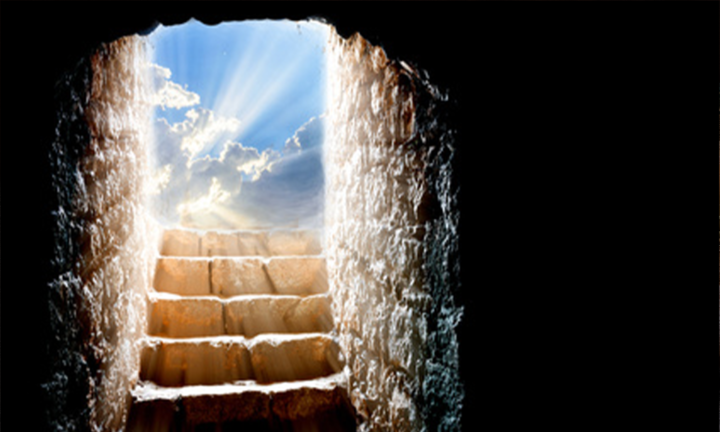
Will the vision of the resurrection of the dead in the Messianic era actually be realized? Who will be resurrected, and when? Answers to all the questions you wanted to ask about the resurrection.

Before Passover, we scrub our houses clean of all leavened bread. Yet, just a few weeks later, chametz becomes a most important element of the Holy Temple service. Why the transformation? What does it represent in the journey of the soul?

The Passover Haftarah relates an incredible vision of redemption: people rising from their graves, and a lamb and a wolf relaxing together. How and when will this happen? Has anything like this happened in the past? And what is Queen Cleopatra's connection to this?
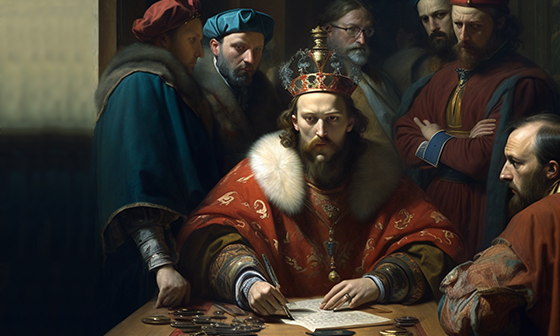
Idolatry seems primitive and ludicrous. Why are the Jewish people called “wise” on account of their choice to serve G-d?
A fascinating discussion about the complexities of life and the courage to choose right.

"I do mitzvahs without feeling," "I didn't have a choice" — does that count as a mitzvah? Does an unintentional transgression count?
On Judaism's double standard on the importance of intent

Can the forces of darkness actually create something? Is witchcraft a real phenomenon in our times?

Why did Esther hesitate to petition Achashverosh to save the Jews, and how did Mordechai convince her to do it? An argument with an eternal message.

An honor guard of Priests and Levites operated at the Holy Temple. Is the guard still required after the destruction of the Temple?

How could manna from heaven serve as forensic evidence in Moses's court, and how could lions participate in Solomon's judicial proceedings?
The Torah is not in the Heavens!

G-d gave the Jewish people the Ten Commandments. Forty years later, Moses restates them, but there are some differences between the two versions. Why?

As the Egyptians pursued them, the Jews were busy arguing about what their next step should be. Was collective suicide and option? And why did G-d side against passionate prayer?

An eye-opening exploration of free choice, reward and punishment, and the power of humans to change G-d’s mind.

Do you feel ineffective in your personal life? Frustrating by the difficulty in influencing people? The ten plagues have a lesson for you.

How did two midwives serve an entire nation, why didn’t Pharaoh punish them, and what reward did they receive?

Jacob wants to bless his grandsons, but suddenly the Divine spirit leaves him? Why did this happen? What was the solution? And what does all this have to do with the sanctity of Joseph and Osnat's marriage?

How can we give encouragement to a person going through a crisis? How did G-d encourage Jacob on his way to a difficult exile in Egypt?

Who was the young woman that kindled the fire of rebellion of the Maccabees? Who was the woman whose resourcefulness helped the Maccabees win? And why did women suffer more than anyone else under Greek rule?

Betrayed by his brothers as a boy, abused by his master and let down by those close to him, he keeps on smiling, helping others, and eventually saves the world! What is his secret?

What trait can help us become close to G-d, reach a deep understanding of the Torah, improve our personal and work relationships, and contribute to every facet of life?

From the time of Laban the Aramaean, to Haman and Ahasuerus, and all the way down the the present, we have suffered from antisemites who attempt to harm us. Why do they hate us? And how should we respond?

Our forefather Abraham introduced the concept of monotheism and hospitality. Jacob's legacy was the 12 tribes of Israel. But what was Isaac's legacy?

Abraham sent his servant Eliezer to find a wife for his son Isaac. When Eliezer arrived at his destination he prayed to G-d and was promptly answered. A comparison with prayers of Moses and King Solomon reveals that Eliezer the servant was answered quicker. Why?

Abraham hosted G-d Himself in his tent. When he saw three passing Arabs, he asked G-d to wait while he welcomes and cares for them. Only later did he reveal that his guests were in fact angels in disguise… Did Abraham keep G-d waiting for a fake mitzvah?
An original analysis of the Biblical story

The three cardinal principles for life we are taught by the Torah’s first three portions. Don’t get stuck in the past, don’t fall into a rut, and don’t become complacent.

The builders of the Tower of Babel invented bricks, thereby revolutionizing construction. Pharoah later used the same techniques for the building of the pyramids. Are the two great construction projects related?
History, Incarnations and education

A rare, exciting and inspiring event, united the entire Jewish people in one place for an extraordinary experience. What’s the real story of the mitzvah of “Hakhel”, why is it so special, and is it still relevant today?

During the High Holidays we read the exhortations to repentance of the prophets Hosea, Isaiah, and Jonah. Are they all discussing the same repentance, or are there different types of repentance for different people?
An address about repentance and what type of repentance is right for me.

“Chanah’s prayer” is a fascinating biblical story that reflects the inner life and challenges of us all, and is especially relevant on the most important day of all - Rosh Hashanah.

Women’s rights became a prominent issue in the 20th century. The revolution that the Rebbe spearheaded in this regard may come as a surprise to many.
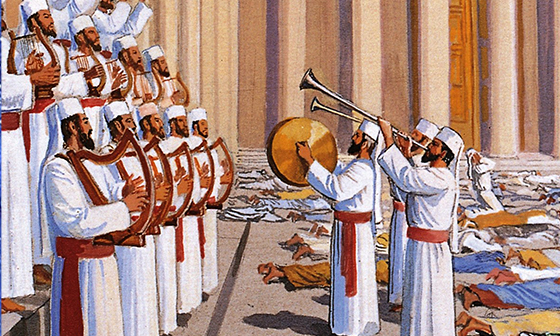
The tribe of Levi is G-d’s “special unit,” tasked with teaching G-d’s ways to the public. Did you know that nowadays this service isn’t restricted to those born into the tribe of Levi, and is open to volunteers?

Poverty is humiliating, and creates social inequality. Why does poverty exist? Why doesn’t G-d give everyone their needs without them having to rely on others’ kindness? A class on the purpose of poverty and wealth, with life lessons for both the wealthy and poor.

What does the shattering of the tablets have to do with the death of the righteous? Did the letters fly off the stone before Moses broke them? An original perspective on the shattering of the tablets and its contemporary relevance.

Every morning and evening we read two passages, shema and vehaya im shamoa. What are the different lessons of these two passages? And how does this relate to the critical question of who is responsible for educating our children - the school or the parents?

The Jewish people sinned many times during their years in the desert. But Moses chose a very specific time and method to rebuke them, teaching us an invaluable lesson regarding interpersonal relations.

Just before entering the Land of Israel, a drama unfolds: Two tribes prefer to remain outside. Why? How does Moses respond? And why does he add more people to their group?

Which relationship is more challenging - my relationship with G-d or with my neighbor? And which relationship does Jewish tradition consider more important?

Why do bad things happen? Are catastrophes G-d's retribution for our sins?

The great leader who took the Jewish people out of Egypt, gave them the Ten Commandments, and led them to the entrance of the Promised Land, was punished to die in the desert just because he hit the rock. How is this fair?

Sometimes going half-way isn’t enough. Whether as a person of faith, or a leader of others, one can’t selectively engage with just the enjoyable ideas or like-minded people. Otherwise, you’re left with nothing.

There is an old technique to help remember things: to tie a knot.
Jewish tradition says that Pharaoh’s ministers did so, and so did the sages of the Mishnah. Even today, Jews tie knots every day in order to remember.
Why does a knot prevent forgetfulness? And did G-d do so Himself?

Moses ordained Joshua, and Joshua ordained his students. This continued from generation to generation — until it stopped
What happened? What broke the chain of tradition?

What's Judaism's position about rejoicing at someone's misfortune?

The Torah gives us 613 commandments, and gives Seven Noahide Laws to society at large. But one rule applies to everyone equally - and yet it was left unsaid: Be a mensch!

People are always looking for guidance. For every aspect of life, there are mentors and guides and therapists and trainers.
What does the Torah say of the matter? Who is worthy of your trust? And how do angels fit into the picture?

Each Friday night, as the family gathers around the Shabbat table, we sing “Eshet Chayil,” the ode of the Jewish woman.
“Charm is deceptive and beauty is vain,” we declare in its closing.
What exactly does that mean?

Rabbi Akiva is famous for his motto: Love your fellow as yourself. Yet, his own students died for... disrespecting their peers. Were they sleeping through class?
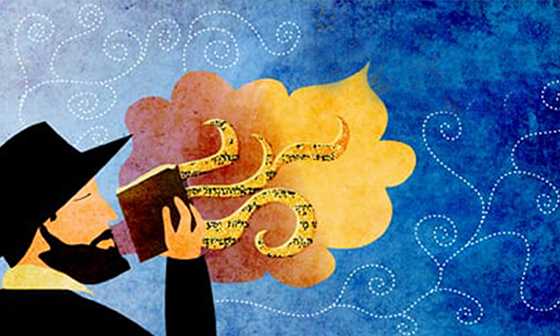
Jews recite blessings constantly: upon awakening, during prayers, before eating and afterwards. Why the obsessiveness? Can't we just do one big 'thank you' each morning?

The Talmud records a bizarre argument between the High Priest and the Chief Rabbis. For generations, readers have been puzzled: Is that behavior befitting the most distinguished members of the Jewish people? In 1986, the Rebbe explained it's deeper meaning.

Who was responsible for streetlights in the olden days? What is the ultimate Jewish nail treatment? And how does it relate to being a Chassid?