
Prophecies, omens, and science. What is the Jewish view? Should we read into the random occurrences in our lives? Should we view scientific advances as questioning our faith? And, by the way — is it possible to jump to the moon?

Prophecies, omens, and science. What is the Jewish view? Should we read into the random occurrences in our lives? Should we view scientific advances as questioning our faith? And, by the way — is it possible to jump to the moon?

Not long ago, we each purchased a Lulav and Etrog set for Sukkos for a tidy sum. A pair of Tefillin is even more costly, and to send a child to a Jewish school you need to open a savings account. Why must things be this way?

When G-d tells Noah that he plans to destroy humanity, Noah does not pound on the table and demand mercy. Why? Why didn't he act like Moses, who pounded on the table and prevented the Children of Israel from being punished?
A deeper reading will shed light on Noah's reasoning and teach us how to judge others.

The commitment of Rosh Hashanah, the emotional connection of Yom Kippur, and the intellectual integration of Simchat Torah: This map was outlined by the Tzemach Tzedek, recounted by the previous Rebbe, and explained by the Rebbe.

This coming year is going to be a Jewish Leap Year. How do these leap years work? Why are they instituted? And what does it say about the Jews?
An astrological journey in the heavens, its impact on the Jewish calendar, and the Jewish soul.

We all have family customs that accompany each Jewish holiday which often occupy us more than the mitzvahs of the holiday themselves. Are we exaggerating? Have we lost the proper equilibrium?

When was polygamy banned in Judaism? Who didn’t agree? Why was the initiator known as “Light of the Exile”?
The history of Rabbeinu Gershom’s landmark enactments and their kabbalistic significance.

The Torah commands that several groups of soldiers be absolved of their military obligation. Why? Is this for the benefit of the war? Or maybe for some social purpose?

Your advisors always tell you to delegate authority and focus on a target audience. Can these principles be applied to the world of education as well?

The secret to success is to properly balance our minds and hearts. A daily ritual, dating back to the days of the Egyptians, will help you attain this balance.

When the Jews saw the Temple burning, they rejoiced… Really? What was joyful about the destruction of the Temple? The Arizal, the great Kabbalist, uncovers the secret.

We sometimes yearn for certain experiences or feel nostalgia for things that are out of our control. Should we push those feelings aside? Or do they serve a purpose of their own?

On which date did the Babylonians invade Jerusalem? Was it the ninth of Tammuz or the seventeenth? An apparent contradiction in ancient Jewish sources is resolved by examining biblical military strategies — with the insight and awareness that that a bad situation can always be turned into a good one.

How objective are you? How much bias is involved in your decision-making process? And what lesson can we learn from the challenge of Tzelafchad’s five daughters to Moses?

Ethics of The Fathers tells of the miraculous phenomena in the Beit Hamikdash. What's their contemporary message for us?

There are times when we are offended by the words or actions of others. We don’t seek revenge, and when asked, we even forgive. But the bitter grudge remains. How can we free our hearts of those negative impulses?

Experts attempt to predict people’s future behavior through statistics. Does that mean you are just a statistic? Do you have the free will to make your own decisions or are you just a cog in the machine?
Join this ancient Jewish debate.

Rabbi Shimon bar Yochai, his son Rabbi Elazar, and the Rebbe each provide a message of encouragement to the Jewish people. The inspiration begins with the Talmud, continues through the Zohar, and receives a new layer of insight through the teachings of Chassidism.

G-d warned Adam that he would die if he ate from the Tree of Knowledge. Yet he lived to the ripe old age of 930!
What happened? And how was it connected to the Tabernacle in the desert?

The holiday of Pesach Sheni (Second Passover) famously teaches that it is never too late. Is that also true of the worst sins and crimes? This is a story of someone who received a message from heaven that it was too late, and yet he still received another chance.

In the early common era, people were accustomed to greeting each other by invoking G-d’s name. Why did they do so? Why is it no longer customary?
A fascinating look into the Jewish reactions to idolatry, Christianity and Islam.

The prophet Elijah delivers a scathing rebuke to the High Court, the group of the most respected elders of Israel. Their crime? They failed to wander through the shtetls and teach Jewish children.
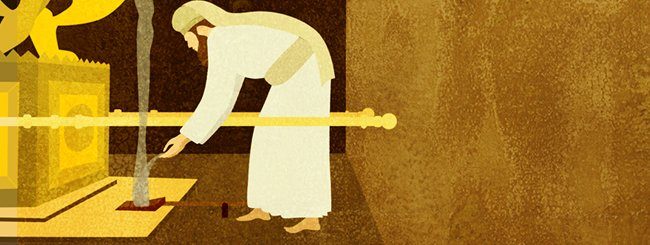
In the Second Temple era, tensions between the Sadducees and the Pharisees would come to a head when the leading rabbis would coach the High Priest for his worship on Yom Kippur.
They would all leave in tears. What exactly was going on?

Fins and scales, split hooves and chewing cud. How is it relevant to me?
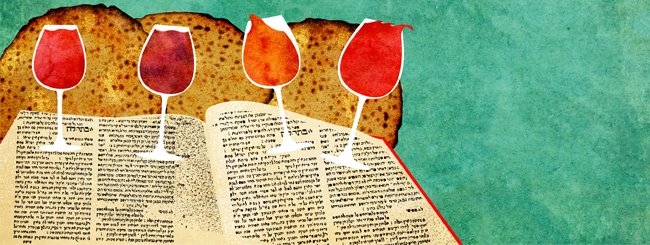
On Passover eve, we all gather around the Seder table and turn our attention to the children’s recital of the Four Questions. These Questions are not just children’s play. They have deep meaning and relevance for every person’s life. The following pages contain a new and original interpretation for the ancient and beloved text.

During the central prayer in Jewish tradition, the Amidah, we ask G-d for health, wealth and happiness. But why is it recited three times a day? Can't I suffice with once a day? And what if I lack nothing--What am I praying for?

It is easy to choose between right and wrong. Choosing between right and right proves more difficult. How are we to ascertain the correct course of action?

When the Torah eulogizes Moses, it mentions the breaking of the Tablets as one of his greatest virtues. Doesn’t that seem ludicrous?

The Jewish people have traditions dating back thousands of years which outline the specific form and format of our traditions. What if archeologists find contradictory evidence? Do we change our rituals or do we not?

Abraham planted cedars in Beer-Sheba, Jacob transplanted them to Egypt, and the Israelites took them along into the desert.
Why were we dragging cedars for four-hundred years? And what does it tell us about “being Jewish at heart”?

People are often quick to shrug off communal responsibility. Even Moses himself, when instructed to redeem the People of Israel, made every effort to avoid the mission.
What does Jewish tradition say about this attitude? Is communal work really for everyone?

Some religious leaders speak derogatorily about others. How did G-d respond to such behavior? What did Rabbi Eliezer do when faced with a similar situation? What did the Rebbe say?

The Torah contains nine ‘songs.’ The Song of Moses, the Song of David, the Song of Miriam, and so on. Jewish tradition seems to cherish the songs of the women. Why so?

Throughout Jewish history, the rabbis have enacted takanot, or Rabbinic ordinances, to safeguard Jewish observance. Shabbat begins at sundown? The sages extend it by eighteen minutes. The evening Shema must be recited by sunrise? The rabbis said midnight.
Where did they learn this behavior? Why are the Torah’s commands not enough?

Until two hundred years ago, eighty percent of the world’s population was illiterate. The statistic among the Jewish population was the opposite: Eighty percent could read and write. How can we explain the difference? Insight into the age-old Jewish approach to education.

Joseph brings his two sons, Manasseh and Ephraim, to be blessed by Jacob before his demise. Jacob surprises them by putting his right hand on Ephraim, the younger son, and his left hand on Manasseh, the older one. Joseph jumps in to correct the mistake. But what exactly bothered him? What was so wrong about Jacob’s choice? A lesson about education, sibling rivalry, and honoring parents.

When Pharaoh suggested to drown the newborns, what were his advisors to do? Object and face the consequences, or agree and work with the circumstances?
When faced with a moral dilemma, do you make do with the situation or take a principled stand?
A fascinating lesson from Bilaam, Job and Jethro.

Joseph lived in a very unforgiving world. People weren’t as tolerant of other nations and other religions like today. Even the forefathers, who preached G-d’s word to the world, preferred to be shepherds, where they wouldn’t be forced to engage with the basest elements of idol-worshiping society. Yet Joseph was fully immersed in their world, and in fact, he was personally responsible for the...

Torah delineates a variety of punishments and penalizations, but imprisonment is not among them. Torah describes Joseph’s incarceration as a feature of the Egyptian ‘judicial system’ – not as a recommendation. In Torah law, prison is not mentioned at all.

Yosef was sent to prison where he met Pharaoh’s cupbearer and baker. He asked for their assistance in securing his release, and in response, Hashem punished him with two more years of imprisonment. Yet those two ministers were instrumental -- by Hashem’s design -- in Yosef’s ultimate release. How does this make sense?

Yaakov asked his son Yosef to inter him in the Cave of Machpelah. He took the opportunity to explain why he buried his mother on the road near Beit Lechem instead of bringing her to the Cave of Machpelah - so that the children of Israel on their way into exile would pray at her gravesite and ask her to intercede on their behalf. But why should Yosef come to terms with his mother’s loneliness? How...

The Zohar notes an interesting distinction in Torah’s description of the angels who met Yaakov on his way out of and into the Land of Israel. Who searched for whom, and why?

Our Sages command us to honor the Shabbat and promise that the costs won’t be included in our destined portion for the year. But there is a caveat: If you have no assets, don’t go into debt. Why can’t we borrow with the power of our faith in G-d?

What is the Jewish approach to understanding G-d’s involvement in the world? Is He involved in every detail, or is He only interested in the ‘important’ things? The Rambam, the Baal Shem Tov, and the first Chabad Rebbe chime in.

The holidays of Tishrei precede the fall months when fields need rainfall. Nonetheless, our Sages delayed the prayer for rain until the last traveling pilgrims would arrive home safely. But why does one Jew’s comfort override the critical need for rainfall?
A powerful lesson in the importance of Ahavat Yisrael, and how deeply it can impact a person.

What is the responsibility of a pious individual among sinners? A deeper look at three of our most famous ancestors, Noach, Avraham and Moshe.

If G-d wants our Mitzvot, why does He place obstacles in our path? Is there meaning to our efforts, or are they just a conduit to success? And how does a single deed make you a partner with G-d?

The Sin of the Tree of Knowledge is the spiritual source of all sins throughout history, and it could have all been avoided through direct talk with Eve. When Hashem gave the Torah to the Jewish people, He changed His approach; He sent Moses to speak to the women first. What does this teach us about men?

Who turns down a million-dollar offer? And who says no to the gift of a new Cadillac? A Jewish perspective on the values of Torah and spirituality.

We all love to celebrate Chanukah, the holiday which marks our victory over the Syrian Greeks and the miracle of the oil. Did you know that it took the sages a full year to decide whether they were victorious?
Behind the scenes in the Chanukah story.